Alan Baratz: A Powerful Architect of Quantum Leadership and Enterprise Innovation

Introduction
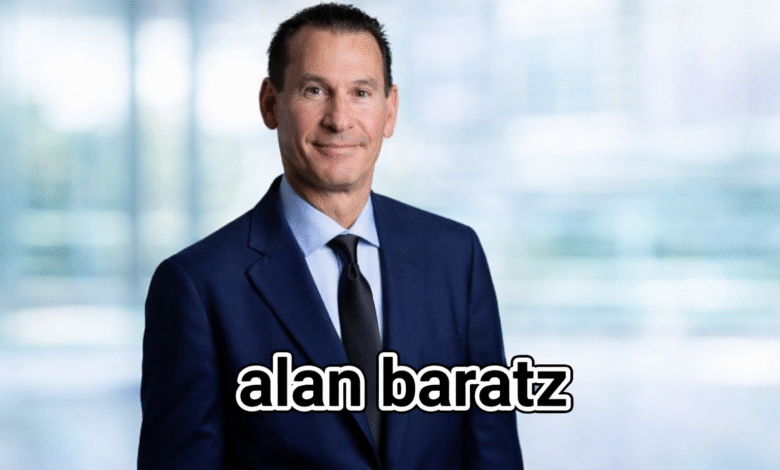
Alan Baratz is widely recognised as a disciplined, forward-looking technology leader whose career spans enterprise software, platform innovation, private equity, and quantum computing. Known for his calm executive presence and product-first mindset, he has built a reputation for turning complex technologies into commercially viable solutions.
From scaling the Java platform in its formative years to leading one of the world’s most visible quantum computing companies, Alan Baratz’s professional journey reflects both positive momentum and the difficult trade-offs inherent in frontier technology leadership. His work demonstrates how long-term vision, when combined with operational realism, can move emerging technologies closer to everyday use.
Quick Bio
| Attribute | Details |
|---|---|
| Full Name | Dr. Alan E. Baratz |
| Nationality | American |
| Profession | Technology Executive |
| Current Role | President & Chief Executive Officer, D-Wave Quantum Inc. |
| Education | Ph.D. in Computer Science (MIT); B.S. in Mathematics & Computer Science (UCLA) |
| Known For | Java platform leadership; commercial quantum computing |
| Industry Focus | Enterprise software, emerging technologies, quantum computing |
Early Academic Foundations
Alan Baratz’s professional path is rooted in rigorous academic training. He earned a doctorate in computer science from the Massachusetts Institute of Technology, one of the world’s most demanding environments for computational research. This experience shaped his analytical thinking and long-term appreciation for technically sound systems rather than short-term market hype.
His undergraduate education in mathematics and computer science further reinforced a structured, problem-solving mindset. These foundations later became critical as he navigated industries where technical depth and executive decision-making must coexist. While many executives come from purely managerial backgrounds, Baratz’s technical literacy has consistently influenced his leadership style.
Alan Baratz and the Start of a Technology Career
Alan Baratz began his career during a period when enterprise software was rapidly evolving but still fragmented. Early roles focused on transforming advanced computing concepts into scalable products, setting the stage for later executive responsibilities. His rise was not instant, but incremental, built on credibility earned through execution rather than publicity.
This period also exposed him to the constraints of large organisations—budget pressures, integration challenges, and customer adoption risks. These early lessons later informed a more balanced leadership approach, combining ambition with operational discipline.
Leadership at JavaSoft and Enterprise Software
One of the most influential chapters in Alan Baratz’s career was his role as the first President of JavaSoft at Sun Microsystems. During this time, Java transitioned from a promising programming language into a global enterprise platform. Baratz helped guide strategy, partnerships, and adoption at a moment when platform credibility was far from guaranteed.
The success of Java was not without resistance. Competing standards, sceptical enterprises, and rapid technological change created constant pressure. Baratz’s leadership during this phase illustrates a recurring theme in his career: progress built amid uncertainty, where positive breakthroughs coexist with structural and competitive challenges.
Executive Roles Across Major Technology Firms
Following JavaSoft, Alan Baratz held senior leadership positions at several global technology organisations, including Cisco, IBM, Avaya, and Symphony. Across these roles, his focus remained consistent—product strategy, execution, and aligning innovation with customer value.
These positions also exposed him to the limits of scale. Large organisations can slow innovation, and not every strategic initiative delivers expected returns. Baratz’s experience navigating both success and constraint strengthened his reputation as a pragmatic executive rather than an idealistic technologist.
CEO Experience and Private Equity Exposure
Alan Baratz later served as chief executive at multiple software and technology companies, including Versata, Zaplet, and NeoPath Networks. As CEO, he faced the realities of capital allocation, restructuring, and growth under competitive pressure. These roles required difficult decisions, including cost controls and strategic refocusing.
His time as a managing director at Warburg Pincus added a private-equity perspective to his skill set. This exposure sharpened his understanding of value creation, governance, and long-term investment discipline—skills that would later prove essential in quantum computing, a sector demanding patience and financial resilience.
Alan Baratz and D-Wave Quantum
In 2020, Alan Baratz became President and Chief Executive Officer of D-Wave Quantum Inc., one of the earliest companies to commercialise quantum computing systems. Unlike experimental research labs, D-Wave operates at the intersection of physics, software, and enterprise demand. Baratz’s mandate was clear: move quantum computing closer to practical use.
Under his leadership, D-Wave has emphasised real-world applications and hybrid quantum-classical solutions. While critics debate different quantum approaches, Baratz has positioned the company around near-term value rather than distant theoretical milestones. This strategy has generated both optimism and scepticism, reflecting the broader tensions in the quantum industry.
Business Ventures and Companies
Across his career, Alan Baratz has been directly involved with multiple companies as an executive leader rather than a passive investor. His ventures span enterprise software, communications technology, and advanced computing. Each role added operational insight rather than personal branding.
What distinguishes Baratz is consistency rather than spectacle. He has avoided over-promising while steadily pushing organisations toward measurable outcomes. This approach may limit short-term hype, but it aligns with his long-term emphasis on sustainable technology adoption.
Leadership Style and Industry Reputation
Alan Baratz is often described as methodical, composed, and product-driven. He prioritises engineering credibility and customer use cases over marketing narratives. This leadership style resonates strongly in technically complex industries but can appear understated in media-driven markets.
At the same time, this restraint can attract criticism. In fast-moving sectors, cautious communication may be perceived as lack of ambition. Baratz’s career reflects this tension—steady progress balanced against external pressure for dramatic breakthroughs.
Legacy in Technology and Quantum Computing
The long-term legacy of Alan Baratz is still being written. His influence on enterprise software through Java is already established, while his impact on quantum computing continues to evolve. If quantum technologies achieve broad adoption, his emphasis on commercial practicality may prove decisive.
Even if the quantum sector faces delays or recalibration, Baratz’s career demonstrates how disciplined leadership can sustain innovation through cycles of enthusiasm and doubt. His legacy is less about singular moments and more about sustained execution across decades.
Conclusion
Alan Baratz represents a rare blend of deep technical grounding and seasoned executive judgment. His career includes major successes, structural constraints, and strategic recalibration—an honest reflection of leadership at the edge of innovation. Rather than chasing attention, he has focused on building systems that work.
In a technology landscape often driven by hype, Baratz’s measured approach stands out. Whether in enterprise software or quantum computing, his influence lies in turning complexity into capability, even when progress is slower and more difficult than headlines suggest.
Frequently Asked Questions
Who is Alan Baratz?
Alan Baratz is an American technology executive and the President and CEO of D-Wave Quantum Inc., known for leadership in enterprise software and quantum computing.
What is Alan Baratz best known for?
He is best known for leading JavaSoft during Java’s enterprise expansion and for guiding D-Wave’s commercial quantum computing strategy.
What is Alan Baratz’s educational background?
He holds a Ph.D. in computer science from MIT and a bachelor’s degree in mathematics and computer science from UCLA.
Is Alan Baratz a founder of D-Wave?
No, he is not a founder. He joined D-Wave as an executive leader and later became CEO.
Why is Alan Baratz important in quantum computing?
He is important for emphasising real-world, commercially viable quantum applications rather than purely experimental development.