MacKenzie Sigalos: The Influential Technology Correspondent Shaping Modern Journalism

Introduction
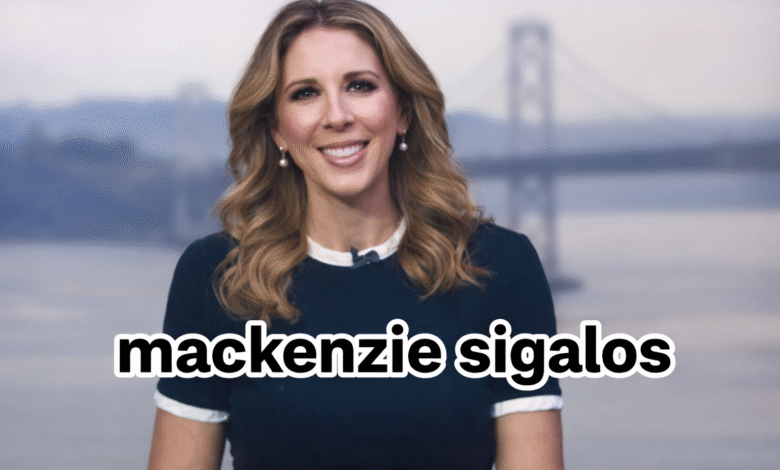
MacKenzie Sigalos has emerged as one of the most influential voices in modern journalism, particularly in technology, finance, and digital assets. As a correspondent for CNBC, she brings clarity, insight, and depth to complex topics, from blockchain to artificial intelligence. Her reporting is widely respected for its accuracy and relevance, making her a trusted source for millions of viewers and readers worldwide.
In an era of fast-changing technology, journalists like MacKenzie Sigalos face the dual challenge of staying ahead of trends while making them understandable to the public. Her ability to balance technical insight with accessible reporting has set her apart in a competitive media landscape.
Quick Bio
| Attribute | Information |
|---|---|
| Full Name | MacKenzie Sigalos |
| Nationality | American |
| Education | Harvard University (Magna Cum Laude), University of Oxford (Postgraduate with Distinction) |
| Profession | Technology Correspondent, Journalist |
| Employer | CNBC |
| Reporting Focus | Technology, AI, Blockchain, Digital Assets, Financial Markets |
Early Career and Rise in Journalism
MacKenzie Sigalos began her journalism career with CNN, working in both New York and Hong Kong. During her tenure at CNN, she gained extensive experience in producing, writing, and reporting across diverse topics, which laid the foundation for her future work at CNBC. Her early exposure to global media environments gave her a unique perspective on how technology and finance intersect with society.
Her transition from CNN to CNBC marked a pivotal moment in her career. At CNBC, she quickly rose through the ranks, initially serving as a producer and senior producer, where she managed digital video content and social media reporting. Her ability to understand and present complex technological trends positioned her as a valuable asset to the network.
Education and Intellectual Foundation
MacKenzie Sigalos’ educational background has significantly contributed to her journalistic excellence. Graduating Magna Cum Laude from Harvard University, she developed critical thinking skills and a strong analytical foundation that supports her investigative reporting. Her academic success provided a springboard for her future specialization in technology and finance.
Following Harvard, she completed postgraduate studies at the University of Oxford, earning distinction for her dissertation and receiving the prestigious Routledge Scholarship. This level of academic achievement reflects her dedication to excellence and has allowed her to approach complex topics like AI and blockchain with intellectual rigor and clarity.
Career at CNBC – Reporting and Influence
At CNBC, MacKenzie Sigalos has become a leading correspondent, focusing on technology, financial markets, and emerging digital assets. She is particularly recognized for her coverage of artificial intelligence, blockchain, and fintech innovations. Her reporting not only informs audiences but also shapes conversations among policymakers, business leaders, and technology experts.
She has also been a founding co-host of Crypto World, a digital show dedicated to cryptocurrency and the future of finance. Through this platform, she educates viewers on the risks, rewards, and regulatory aspects of digital currencies. Her work highlights both the transformative potential and the challenges of emerging technologies, making her reporting highly impactful.
Reporting Style and Strengths
One of MacKenzie Sigalos’ notable strengths is her ability to present complex technological concepts in a clear and understandable manner. This skill makes her reporting accessible to both experts and general audiences. She employs in-depth analysis, interviews with key industry players, and real-world examples to make technical content relatable.
Her journalistic integrity is another cornerstone of her success. MacKenzie is committed to accuracy, transparency, and balance, providing both the positive potential and the risks associated with technological developments. This balanced approach enhances her credibility and ensures that her audience receives a comprehensive perspective.
Global Reporting and Industry Reach
MacKenzie Sigalos’ work extends beyond the United States, with reporting that spans Africa, Asia-Pacific, Europe, and North America. Her global perspective allows her to highlight how technology and finance evolve differently across regions and cultures. By covering international developments, she brings a worldwide lens to viewers who might otherwise only see domestic perspectives.
Her involvement in global events and industry panels further amplifies her influence. She frequently moderates discussions on AI, blockchain, and fintech, offering insights that bridge the gap between business, technology, and public understanding. These appearances enhance her reputation as a thought leader in her field.
Challenges and Critiques
While MacKenzie Sigalos is highly respected, her career also reflects the challenges of modern journalism. Reporting on fast-moving technological trends requires constant adaptation and extensive research. Mistakes or incomplete information can have significant consequences for public understanding and investor confidence.
Additionally, the digital landscape presents challenges such as misinformation and public skepticism. MacKenzie navigates these issues by relying on verified sources, expert interviews, and analytical rigor. Her ability to maintain accuracy under pressure demonstrates her professionalism and dedication.
Legacy and Impact
MacKenzie Sigalos has carved out a legacy as a journalist who combines intellectual rigor with accessible reporting. She has significantly contributed to CNBC’s coverage of technology and digital assets, shaping the way audiences understand innovation and market trends.
Her influence is evident not only in viewership and readership metrics but also in her ability to engage policymakers and industry leaders. Through reporting, panel discussions, and digital content, she continues to educate and inform audiences about critical developments in technology and finance.
Conclusion
MacKenzie Sigalos stands as a powerful example of modern journalism, blending expertise, clarity, and integrity. Her work at CNBC has not only informed millions but also set a standard for how technology and financial reporting should be conducted. By providing balanced, in-depth, and accessible reporting, she ensures that audiences understand both the opportunities and risks of technological innovation.
Her career serves as an inspiration for aspiring journalists who aim to make an impact in complex fields while maintaining credibility and relevance. As technology continues to evolve, MacKenzie Sigalos’ reporting will remain a vital source of insight for audiences worldwide.
Frequently Asked Questions (FAQ)
Q1: Who is MacKenzie Sigalos?
A1: MacKenzie Sigalos is an American journalist and technology correspondent at CNBC, specializing in technology, digital assets, AI, and financial markets.
Q2: What is MacKenzie Sigalos’ educational background?
A2: She graduated Magna Cum Laude from Harvard University and completed postgraduate studies at the University of Oxford with distinction.
Q3: What topics does MacKenzie Sigalos cover?
A3: Her reporting focuses on technology, AI, blockchain, fintech, digital assets, and global financial markets.
Q4: Where has MacKenzie Sigalos reported from?
A4: She has reported globally, covering Africa, Asia-Pacific, Europe, and North America.
Q5: What makes MacKenzie Sigalos’ reporting unique?
A5: She combines deep analytical insight with accessible explanations, providing balanced perspectives on complex technological and financial issues.