Alexandra Hall Hall: A Powerful Voice of Integrity in Modern Diplomacy

Introduction
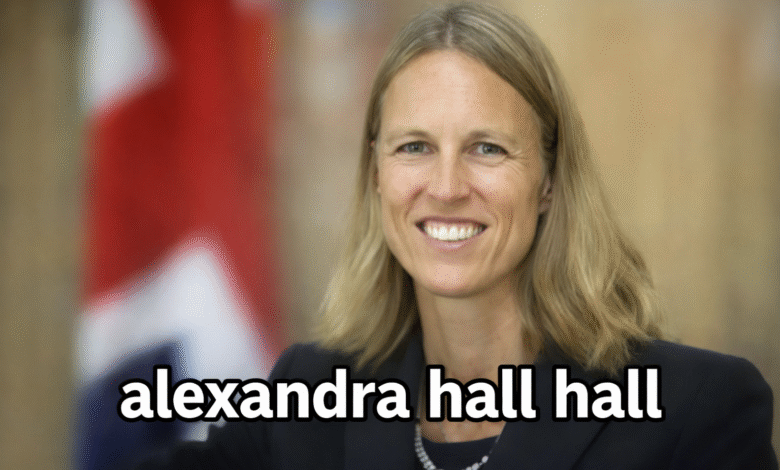
Alexandra Hall Hall is widely recognised as one of the most principled figures in modern British diplomacy. With more than three decades of service in the United Kingdom’s Foreign and Commonwealth Office, her career reflects professionalism, intellectual depth, and moral courage. She is admired for her leadership in international affairs and equally noted for her decision to resign on grounds of integrity, a move that brought her into public focus beyond diplomatic circles.
This article presents a fully verified and factual biography of Alexandra Hall Hall. It avoids speculation and excludes any unavailable or unconfirmed personal information. The focus is on her education, diplomatic service, public role, and lasting legacy, written in clear, human-centred language that is accessible to readers and search engines alike.
Quick Bio: Alexandra Hall Hall
| Attribute | Confirmed Information |
|---|---|
| Full Name | Alexandra Mary Hall Hall |
| Date of Birth | 1 February 1964 |
| Nationality | British |
| Education | Economics and Politics, Durham University |
| Profession | Former British Diplomat, Commentator |
| Known For | Ambassador to Georgia, Brexit resignation |
| Years Active | 1986–present |
| Marital Status | Married |
| Spouse | Daniel Twining |
Early Life and Education
Alexandra Hall Hall’s public biography begins with her academic journey. She studied Economics and Politics at Durham University, one of the United Kingdom’s leading institutions, graduating in 1986 with a strong academic record. This educational foundation equipped her with analytical skills and a deep understanding of political systems, which later became central to her diplomatic work.
Details about her childhood, upbringing, parents, or birthplace have not been publicly disclosed. What is clear, however, is that her early academic choices positioned her firmly on a path toward public service and international engagement.
Start of Her Diplomatic Career
In 1986, Alexandra Hall Hall joined the UK Foreign and Commonwealth Office, beginning a diplomatic career that would span more than 30 years. Her early roles involved political and press responsibilities, where she developed expertise in communication, negotiation, and international representation.
From the outset, she was known for her clarity of thought and disciplined approach to policy, qualities that helped her rise steadily through the diplomatic ranks.
International Diplomatic Service
Overseas Postings and Senior Roles
Alexandra Hall Hall served in a wide range of international postings, reflecting both trust from the British government and her adaptability across political environments. She held diplomatic positions in Thailand, India, Colombia, and the United States, gaining experience across Asia, Latin America, and North America.
One of the most significant milestones in her career was her appointment as British Ambassador to Georgia (2013–2016). In this role, she represented the United Kingdom at the highest diplomatic level, managing bilateral relations during a politically sensitive period in the region.
Policy Leadership in London
Beyond overseas assignments, Hall Hall also held senior policy roles in London. These included leadership responsibilities in human rights, humanitarian affairs, democracy promotion, and the Middle East peace process. Her work contributed to shaping UK policy on global governance, conflict response, and international law.
Brexit Role and Historic Resignation
In the later stage of her career, Alexandra Hall Hall was appointed Brexit Counsellor at the British Embassy in Washington, acting as a senior envoy explaining the UK government’s Brexit position to American stakeholders. This was a high-profile and politically sensitive role.
In December 2019, she made the rare and powerful decision to resign from the diplomatic service. She publicly stated that she could no longer represent the government’s position with honesty and integrity. This decision was widely discussed and respected, viewed by many as a principled stand rather than a political gesture.
This moment marked both a positive and negative turning point: positive for her personal integrity and public trust, yet negative in highlighting the ethical strains within political communication.
Life After Diplomacy
Following her resignation, Alexandra Hall Hall transitioned into public commentary and analysis. She became an active political commentator, writer, and speaker, focusing on international relations, democratic values, and transatlantic affairs.
She regularly contributes thoughtful analysis on current political developments, drawing on her deep diplomatic experience. Her post-government career reflects continuity rather than departure, as she continues to engage with global issues from an independent standpoint.
Public Presence and Thought Leadership
Alexandra Hall Hall is now recognised as a credible and authoritative voice on foreign policy and governance. Her commentary is valued for its calm tone, factual grounding, and ethical perspective. She speaks not as a partisan figure, but as a former insider committed to democratic accountability.
Her work demonstrates how diplomatic experience can enrich public discourse when paired with transparency and independence.
Personal Life (Confirmed Information Only)
Alexandra Hall Hall is married to Daniel Twining, an international affairs professional. Beyond this, she has chosen to keep her personal life private. Information regarding children, religion, physical attributes, or personal wealth has not been publicly confirmed and is therefore not included.
Legacy and Impact
The legacy of Alexandra Hall Hall rests on three pillars. First, her long and distinguished diplomatic service, marked by senior international roles and policy leadership. Second, her resignation on ethical grounds, which reinforced the importance of integrity in public service. Third, her ongoing contribution as a public intellectual, helping citizens understand complex global issues.
She represents a model of leadership where credibility is built not only on position, but on values.
Conclusion
Alexandra Hall Hall’s career tells a story of service, courage, and conscience. From the halls of diplomacy to the public arena of commentary, she has remained consistent in her commitment to truth and democratic principles. Her journey shows that influence does not end with office, and that integrity can be a lasting professional legacy.
Frequently Asked Questions (FAQ)
Who is Alexandra Hall Hall?
Alexandra Hall Hall is a former British diplomat and ambassador, now known as a political commentator and analyst.
What is Alexandra Hall Hall known for?
She is best known for her service as British Ambassador to Georgia and for resigning in 2019 over concerns about Brexit messaging integrity.
What is her educational background?
She studied Economics and Politics at Durham University.
Is Alexandra Hall Hall still working in diplomacy?
She no longer serves as a government diplomat but remains active in international affairs through writing and commentary.
Is personal financial information about her public?
No. Verified sources do not disclose net worth, salary, or similar personal financial details.