maria torres springer: A Powerful Rise from Struggle to Leadership — Inspiring Success with Real Challenges

Introduction
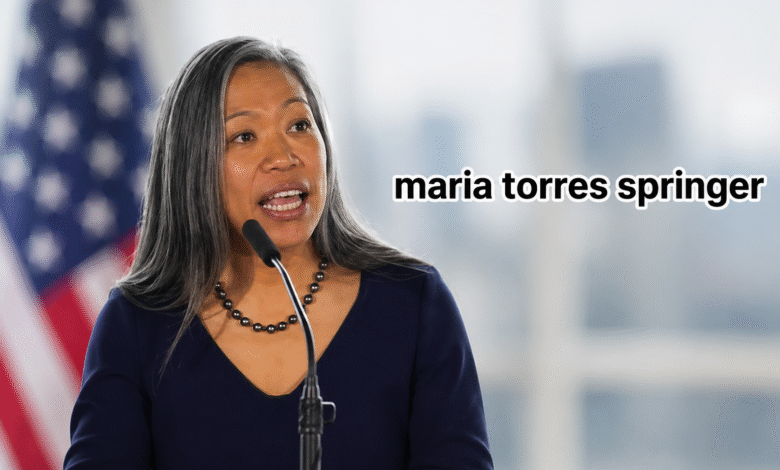
Maria Torres-Springer is widely recognized as one of the most influential public leaders in New York City, known for her dedication to economic development and housing reform. Her journey is inspiring, but it is also grounded in real-life struggles that shaped her character and leadership style. From a modest upbringing to holding one of the highest positions in city government, her story reflects both determination and resilience.
At the same time, her path has not been without challenges. Like many public officials, she has faced political pressures and difficult decisions throughout her career. These experiences highlight both the strengths and the complexities of leadership, making her story not just inspirational but also realistic and relatable.
Quick Bio
| Field | Details |
|---|---|
| Full Name | Maria Torres-Springer |
| Date of Birth | January 24, 1977 |
| Age | 49 years (as of 2026) |
| Birthplace | Los Angeles, California, USA |
| Nationality | American |
| Ethnicity | Filipino-American |
| Education | Yale University, Harvard Kennedy School |
| Husband | Jamie Torres-Springer |
| Children | Two daughters |
| Profession | Public Official, Policy Leader |
| Known For | NYC Housing & Economic Development Leadership |
Early Life and Background
Maria Torres-Springer was born in Los Angeles, California, into a Filipino immigrant family. Her parents moved to the United States from the Philippines, seeking better opportunities for their children. Growing up in a household with limited financial resources, she experienced firsthand the struggles that many immigrant families face.
Her early years were shaped by both hardship and resilience. After the loss of her mother, she spent part of her childhood in the Philippines. This experience helped her develop a broader understanding of different cultures and social challenges, which later influenced her commitment to public service and community development.
Education and Academic Journey
Education played a crucial role in Maria Torres-Springer’s life. She became the first member of her family to attend college, marking a significant milestone. She earned her bachelor’s degree in Ethics, Politics, and Economics from Yale University in 1999, where she built a strong foundation in public policy and social issues.
She later pursued a master’s degree in Public Policy from Harvard Kennedy School in 2005. These academic experiences not only strengthened her knowledge but also prepared her for leadership roles in government. Her education reflects her dedication to learning and her desire to create meaningful change in society.
Career Beginnings
Maria Torres-Springer began her career in public service, focusing on economic development and urban policy. She worked in various roles within New York City, gaining valuable experience in planning and community engagement. Her early work involved collaborating with organizations that aimed to improve neighborhoods and support local businesses.
These initial roles helped her understand the complexities of city governance. She developed skills in leadership, policy-making, and problem-solving, which later became essential in her higher-level positions. Her early career laid the groundwork for her future success in public administration.
Rise in New York City Government
Maria Torres-Springer’s career advanced as she took on more significant responsibilities in New York City government. She served as Commissioner of the Department of Small Business Services, where she focused on supporting entrepreneurs and strengthening the local economy. Her efforts contributed to job creation and business growth across the city.
She later became President and CEO of the New York City Economic Development Corporation. In this role, she worked on large-scale development projects aimed at improving infrastructure and creating opportunities for residents. Her leadership demonstrated a strong commitment to economic progress and community well-being.
Leadership in Housing and Development
One of Maria Torres-Springer’s most impactful roles was serving as Commissioner of the Department of Housing Preservation and Development. Here, she focused on addressing the city’s housing challenges and expanding affordable housing options. Her work played a key role in improving living conditions for many New Yorkers.
However, housing development in a large city comes with complex challenges. Balancing growth with affordability and community needs is not easy. Despite these difficulties, she remained dedicated to finding solutions that benefit a wide range of residents, showing both determination and adaptability.
Senior Leadership and Public Impact
Maria Torres-Springer later served as Deputy Mayor for Housing, Economic Development, and Workforce under Eric Adams. In this position, she played a central role in shaping policies that impacted millions of people. Her work focused on strengthening the economy, supporting workers, and improving housing access.
She was eventually appointed as the First Deputy Mayor of New York City, becoming the first Filipina to hold this role. This achievement marked a significant milestone in her career and highlighted her influence in public service. Her leadership at this level required balancing multiple priorities and addressing complex urban issues.
Challenges and Career Transitions
Despite her achievements, Maria Torres-Springer’s career has included moments of transition and challenge. In 2025, she stepped down from her role as First Deputy Mayor. Such changes are not uncommon in public service, where political dynamics and administrative shifts can influence leadership roles.
These experiences reflect the realities of working in government. Leadership often involves navigating uncertainty and adapting to new circumstances. Maria Torres-Springer’s ability to continue contributing after such transitions demonstrates her resilience and ongoing commitment to public service.
Legacy and Influence
Maria Torres-Springer’s legacy is defined by her dedication to improving urban life. Her work in housing, economic development, and workforce programs has had a lasting impact on New York City. She has helped shape policies that aim to create more inclusive and sustainable communities.
Her story also serves as an inspiration for individuals from diverse backgrounds. As a Filipino-American leader, she has broken barriers and shown that perseverance and education can lead to significant achievements. Her legacy continues to influence future leaders in public service.
Conclusion
Maria Torres-Springer’s journey is a powerful example of how determination and resilience can lead to meaningful change. From a challenging upbringing to a leadership role in one of the world’s most complex cities, her story reflects both success and struggle.
Her career highlights the importance of public service, education, and adaptability. While her path has included both achievements and challenges, her contributions to housing and economic development remain significant. She continues to be a respected figure whose work has positively impacted many lives.
FAQ
Who is Maria Torres-Springer?
Maria Torres-Springer is an American public official known for her leadership in New York City government, particularly in housing and economic development.
What is Maria Torres-Springer known for?
She is best known for her roles in NYC government, including serving as First Deputy Mayor and leading major housing and economic initiatives.
What is Maria Torres-Springer’s educational background?
She studied at Yale University and Harvard Kennedy School, focusing on public policy and related fields.
Is Maria Torres-Springer married?
Yes, she is married to Jamie Torres-Springer and has two daughters.
What is her contribution to public service?
Her contributions include expanding housing opportunities, supporting economic growth, and improving workforce programs in New York City.
Why is Maria Torres-Springer influential?
She is influential because of her leadership roles and her impact on policies that affect millions of people, especially in urban development and housing.