Philip Jansen: A Powerful Corporate Leader Shaping Global Business Through Strategy, Resilience, and Controversy

Introduction
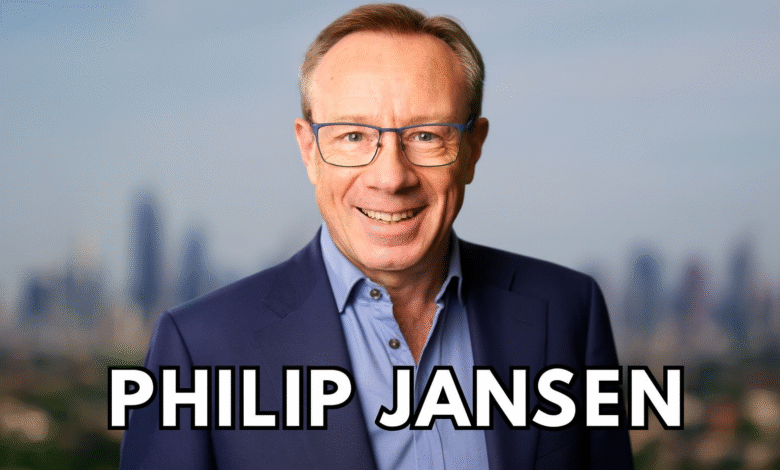
Philip Jansen is one of the most recognisable corporate leaders in modern British business. Known for leading complex, high-pressure organisations, he has built a career across multiple industries including consumer goods, travel, food services, payments, telecommunications, and global advertising. His leadership journey reflects both strong strategic achievements and high-profile challenges, making him a compelling figure in contemporary corporate governance.
Over the decades, Philip Jansen has held senior executive roles at some of the world’s most influential companies. His tenure as Chief Executive Officer of BT Group placed him at the centre of national debate on infrastructure, labour relations, and digital transformation. Today, his influence continues through board-level leadership roles, reinforcing his reputation as a decisive but sometimes controversial business leader.
Quick Bio: Philip Jansen
| Attribute | Details |
|---|---|
| Full Name | Philip Eric Rene Jansen |
| Date of Birth | 28 January 1967 |
| Age | 58 (as of 2025) |
| Birthplace | United Kingdom |
| Nationality | British |
| Education | Bachelor’s degree in Economics, University College Cardiff |
| Marital Status | Married |
| Children | Five |
| Known For | CEO of Worldpay, CEO of BT Group, Chairman of WPP |
| Current Role | Chairman, WPP plc |
Early Life and Education
Philip Jansen was born in the United Kingdom on 28 January 1967. Public information about his early childhood is limited, reflecting his preference for keeping personal life separate from public leadership. What is well documented, however, is his strong academic foundation and early inclination toward business and economics.
He was educated at St George’s College, Weybridge, a respected independent school, before going on to study economics at University College Cardiff, now known as Cardiff University. His academic training provided him with analytical and commercial skills that would later define his executive career. Even at this early stage, Philip Jansen showed an interest in structured decision-making, market dynamics, and organisational leadership.
Start of Career and Early Professional Development
Philip Jansen began his professional career at Procter & Gamble, one of the world’s most demanding corporate environments for young managers. Working in marketing and commercial roles, he developed a disciplined approach to brand strategy, consumer insight, and operational performance.
He later moved into senior positions at Dunlop Slazenger and Telewest Communications, where he became Managing Director of the Consumer Division. These roles marked a turning point, shifting him from functional leadership into full operational responsibility. His experience in telecommunications during this period would later prove highly relevant in his career.
Rise to Senior Executive Leadership
Jansen’s reputation as a turnaround-capable executive grew through senior leadership roles at MyTravel Group, where he served as Chief Operating Officer. Managing large, geographically dispersed operations strengthened his expertise in cost control, restructuring, and strategic execution.
He then joined Sodexo, a global services company, where he held multiple senior executive roles. At Sodexo, Philip Jansen gained international leadership experience, managing complex service businesses across different regions. This phase of his career cemented his profile as a leader capable of handling scale, diversity, and operational intensity.
Business Ventures and Major Companies Led
One of the most defining chapters of Philip Jansen’s career was his appointment as Chief Executive Officer of Brakes Group in 2010. Leading a major foodservice distribution business sharpened his commercial instincts and exposure to supply-chain complexity.
His next major role was at Worldpay, where he became Chief Executive Officer in 2013. At Worldpay, Philip Jansen oversaw a period of significant growth and led the company through its landmark public listing. This achievement positioned him as a trusted leader in the global payments industry and significantly raised his corporate profile.
Philip Jansen at BT Group
In February 2019, Philip Jansen took on one of the most challenging roles in British business: Chief Executive Officer of BT Group. Leading the UK’s largest telecommunications provider placed him under intense public, political, and regulatory scrutiny.
On the positive side, his tenure focused on long-term infrastructure investment, particularly in full-fibre broadband and digital connectivity. These initiatives were widely seen as critical for the UK’s economic future. On the negative side, his leadership faced strong criticism during industrial disputes, including strikes related to pay and working conditions. These events made his tenure both impactful and contentious.
Philip Jansen stepped down as BT CEO in January 2024, closing a chapter marked by bold strategy, public controversy, and structural transformation.
Boardroom Leadership and Current Role
After leaving executive management, Philip Jansen transitioned into governance and board leadership. In 2025, he became Chairman of WPP plc, one of the world’s largest advertising and communications groups.
This role reflects a shift from operational control to strategic oversight. As chairman, Philip Jansen plays a key role in guiding corporate direction, executive accountability, and long-term value creation. His move into board leadership highlights both his experience and enduring influence in global business.
Leadership Style and Reputation
Philip Jansen is widely regarded as a decisive and data-driven leader. Supporters praise his willingness to make difficult decisions and tackle structural problems head-on. Critics argue that his direct style can sometimes intensify conflict, particularly in highly unionised environments.
This mix of strength and controversy defines much of his legacy. He is neither a purely consensus-driven leader nor a passive administrator. Instead, Philip Jansen represents a leadership model focused on execution, resilience, and long-term positioning, even when short-term backlash is likely.
Net Worth, Salary, and Source of Income
Philip Jansen’s income has primarily come from senior executive salaries, performance bonuses, long-term incentive plans, and board-level fees. His compensation peaked during his time as CEO of BT Group and earlier at Worldpay.
His estimated net worth is reported in the multi-million-dollar range, reflecting decades of senior leadership rather than entrepreneurial ownership. Today, his income is largely derived from non-executive chairmanship and corporate governance roles.
Legacy and Impact
The legacy of Philip Jansen lies in his ability to operate at the highest levels of corporate complexity. He has led publicly listed companies, managed large workforces, and navigated intense public scrutiny. His career demonstrates how modern corporate leadership often involves both progress and pushback.
Whether viewed positively or critically, Philip Jansen has left a lasting imprint on the organisations he led. His influence now continues through boardroom leadership, shaping strategy rather than executing it directly.
Conclusion
Philip Jansen’s career tells a powerful story of ambition, discipline, and resilience. From early marketing roles to leading national infrastructure providers, he has consistently operated where pressure is highest and decisions matter most. His journey reflects the reality of senior leadership: meaningful impact rarely comes without controversy.
As a chairman and corporate advisor, Philip Jansen remains an influential figure in global business. His story offers valuable insight into the rewards and risks of executive power in the modern corporate world.
Frequently Asked Questions (FAQ)
Who is Philip Jansen?
Philip Jansen is a British business executive known for serving as CEO of Worldpay and BT Group, and currently as Chairman of WPP.
What is Philip Jansen known for?
He is known for leading large, complex organisations and for his role in major corporate transformations.
Is Philip Jansen still active in business?
Yes, he remains active as a board-level leader and chairman.
What industries has Philip Jansen worked in?
He has worked across consumer goods, travel, food services, payments, telecommunications, and advertising.
What defines Philip Jansen’s leadership style?
His style is often described as decisive, strategic, and resilient, with both strong supporters and critics.
urab