Introduction
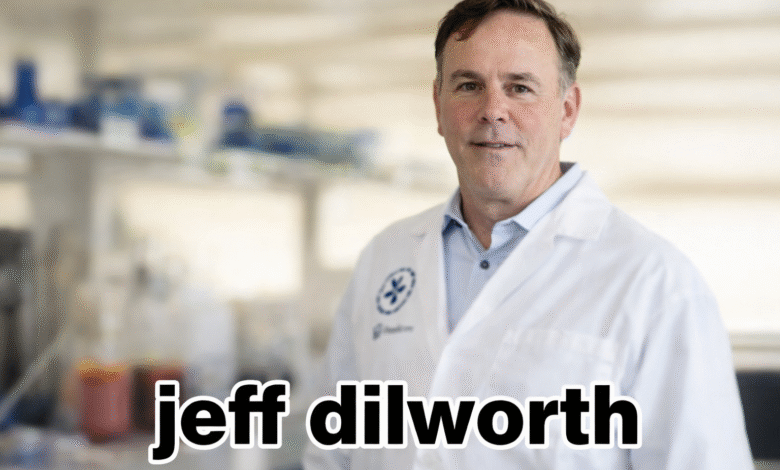
Jeff Dilworth has established himself as a prominent figure in the world of regenerative medicine and epigenetics. With decades of research focusing on muscle regeneration and stem cell biology, his work has contributed to a deeper understanding of how gene expression controls cell fate. His scientific discoveries are not only significant in academic circles but also hold the potential to revolutionize treatments for muscular disorders.
Dr. Dilworth’s meticulous research combines molecular biology, epigenetics, and stem cell science, creating innovative approaches to tissue regeneration. His work emphasizes the interplay between transcription factors and epigenetic mechanisms, helping to uncover the secrets behind muscle repair and regeneration.
Quick Bio of Jeff Dilworth
| Attribute | Details |
|---|---|
| Full Name | F. Jeffrey Dilworth, PhD |
| Education | B.Sc. (Hons), Biochemistry – Queen’s University; Ph.D., Biochemistry – Queen’s University; Postdoctoral training in France & USA |
| Current Role | Professor of Cell and Regenerative Biology, University of Wisconsin–Madison |
| Research Focus | Epigenetic regulation, muscle stem cell biology, skeletal muscle regeneration |
| Career Start | Postdoctoral research in late 1990s, joined Ottawa Hospital Research Institute in 2004 |
| Legacy | Leading research in gene regulation and regenerative medicine |
| Publications | Science, Developmental Cell, Journal of Clinical Investigation, Genes & Development |
Early Career and Education of Jeff Dilworth
Jeff Dilworth began his academic journey at Queen’s University in Kingston, Ontario, Canada, where he earned his B.Sc. in Biochemistry. His passion for molecular biology led him to continue at the same institution, completing his Ph.D. in Biochemistry in 1997. During this time, he focused on understanding the molecular mechanisms behind vitamin D analogs and their cellular effects.
Following his doctoral studies, Dilworth pursued postdoctoral research at the Institut de Génétique et de Biologie Moléculaire et Cellulaire in France and later at the Fred Hutchinson Cancer Research Center in Seattle, Washington. These experiences allowed him to explore gene regulation and epigenetic mechanisms in depth, laying the foundation for his later work in regenerative medicine.
Scientific Contributions and Research Focus
The core of Jeff Dilworth’s research revolves around epigenetic regulation of gene expression and how it guides muscle stem cells to repair damaged tissue. His laboratory investigates transcription factors and chromatin-modifying enzymes that dictate which genes are activated during muscle regeneration.
One of his major research interests includes understanding how muscle progenitor cells expand and differentiate in response to injury. By examining these molecular processes, Dilworth has provided crucial insights into the mechanisms that control skeletal muscle regeneration, offering potential pathways for future therapies in muscular dystrophies and age-related muscle degeneration.
Impact on Regenerative Medicine
Jeff Dilworth’s work in regenerative medicine extends beyond basic science. His findings contribute to the development of stem cell therapies and strategies that could enhance muscle repair in patients with injuries or degenerative conditions. By identifying key regulatory genes and their epigenetic control, Dilworth’s research helps in designing interventions that can accelerate healing and improve patient outcomes.
In addition, his studies on the epigenetic enzyme JMJD3 and other chromatin-modifying proteins have opened new doors for therapeutic approaches. These discoveries highlight both the potential and challenges of manipulating gene expression to improve tissue regeneration, underscoring the delicate balance between positive regenerative effects and potential unintended consequences.
Academic Positions and Leadership Roles
After completing his postdoctoral training, Jeff Dilworth joined the Ottawa Hospital Research Institute as a Senior Scientist in 2004. He has also served as a professor at the University of Ottawa and now holds a faculty position at the University of Wisconsin–Madison.
His leadership extends to collaborative research networks, where he mentors young scientists and contributes to the strategic direction of studies in muscle biology and regenerative medicine. Dilworth’s career trajectory demonstrates a combination of scientific rigor, mentorship, and an unwavering commitment to advancing human health through research.
Publications and Recognition
Over the years, Dilworth has published extensively in high-impact scientific journals such as Science, Developmental Cell, Journal of Clinical Investigation, and Genes & Development. His publications often explore how epigenetic mechanisms influence muscle stem cell differentiation and tissue repair, offering both groundbreaking findings and thought-provoking insights.
These contributions have not only advanced the scientific community’s understanding of muscle biology but have also earned him recognition among peers as a leading figure in regenerative medicine. His research continues to be cited in studies exploring epigenetics, stem cell biology, and therapeutic applications.
Challenges and Critical Perspectives
While Jeff Dilworth’s research has led to remarkable breakthroughs, it also highlights the complexity of regenerative medicine. Manipulating epigenetic mechanisms must be approached cautiously, as unintended effects can arise. The challenge lies in translating laboratory discoveries into safe and effective clinical therapies, a process that requires rigorous testing and validation.
Additionally, while much of his work is promising for muscle regeneration therapies, translating these findings into treatments for patients with diverse genetic backgrounds and conditions remains a work in progress. Nonetheless, Dilworth’s contributions provide the foundation for these future developments.
Legacy and Future Directions
Jeff Dilworth’s legacy is rooted in his ability to combine fundamental biology with clinical relevance. His studies provide a roadmap for understanding how genes are regulated in muscle cells and how this regulation can be harnessed to repair damaged tissue.
Looking forward, his research will likely continue to influence regenerative medicine, stem cell therapy, and epigenetic interventions. The lessons learned from his work may eventually lead to more effective treatments for muscle-related diseases, improved recovery after injuries, and even interventions for age-related muscle decline.
Conclusion
Jeff Dilworth stands out as a pioneering scientist whose research bridges the gap between molecular biology and clinical applications. His work in epigenetics and muscle stem cell biology has expanded the frontiers of regenerative medicine, offering hope for innovative therapies. While challenges remain in translating lab discoveries to human treatments, Dilworth’s research has laid a solid foundation for future breakthroughs in muscle regeneration and epigenetic therapy.
Frequently Asked Questions (FAQ)
Who is Jeff Dilworth?
Jeff Dilworth is a scientist and professor known for his research on epigenetic regulation and muscle stem cell biology. He has published extensively in high-impact journals and contributes to regenerative medicine research.
What is his research focus?
His research focuses on how gene expression and epigenetic mechanisms control muscle stem cell differentiation and skeletal muscle regeneration.
Where does he work?
He is currently a Professor of Cell and Regenerative Biology at the University of Wisconsin–Madison and has previously worked at the Ottawa Hospital Research Institute.
What are some of his notable contributions?
Dilworth’s research has elucidated the role of transcription factors and epigenetic enzymes in muscle regeneration and tissue repair. He has significantly advanced the understanding of skeletal muscle biology.
Has he contributed to therapies?
While his work is primarily foundational research, it informs potential therapeutic strategies for muscle degeneration, injury repair, and regenerative medicine applications.